
31 Aug 2026
For many bike tour operators, success can be difficult to measure.
From the outside, everything looks great.
But there is an important question that is sometimes harder to answer:
Are you building a better business—or are you simply surviving another busy season?
The two things aren't necessarily the same. A business can be incredibly busy and still be fragile.
It can generate plenty of bookings while depending too heavily on one channel. It can increase revenue while margins become smaller. It can keep growing while the owner becomes more overwhelmed every year.
Being busy is a good thing. But it isn't the same as being sustainable.
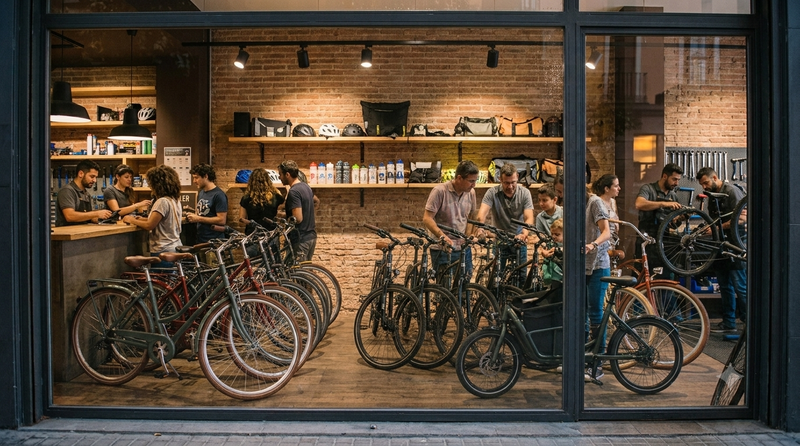
When we talk about growing a business, we often think about numbers going up.
But growth can create new problems if the foundations aren't strong.
Growth, by itself, isn't the goal. The goal is to build a business that becomes stronger as it grows.
That means asking different questions.
These questions can tell you much more about the health of your business than your booking numbers alone.
This is one of the biggest challenges facing independent operators. In the early stages, the owner often does everything.
They answer emails, manage bookings, guide tours, fix problems, manage the bikes, create social media content, talk to hotels, run advertising, deal with suppliers, handle finances...
They make every decision. That's understandable. Sometimes, it's necessary.
But if the business grows without changing this structure, the owner can become the biggest bottleneck in the company.
The business may look successful from the outside. But internally, everything still depends on one person.
A more sustainable business gradually builds systems that allow work to happen without the owner being involved in every decision.
That could mean:
The goal isn't to remove the owner from the business. It's to give the owner more control over where their time and energy go.
Imagine two bike tour businesses.
Business A generates €200,000 in annual revenue.
Business B generates €120,000.
At first glance, Business A looks more successful.
But what if Business A:
And Business B:
Which business is healthier?
Revenue matters. But it is only one part of the picture.
A sustainable business needs to understand the relationship between revenue, costs, margins, workload, and long-term stability.
One of the best ways to think about sustainable growth is to ask:
What are we building today that will make the business stronger tomorrow?
Some of the most valuable assets aren't immediately visible in your monthly revenue report.
The strongest businesses don't just focus on generating today's bookings. They invest in assets that make tomorrow's bookings easier, more profitable, or more predictable.
Seasonality is a reality for many bike tour operators.
Every year, the cycle begins again. The season arrives. Demand increases. The business gets busy. The season ends. Then everything slows down. And the next year starts again.
But a strong business should not start from zero every season. The work you do this year should make next year easier.
The customers you acquire this year can become repeat customers. The reviews you collect can help future customers choose you. The content you create can continue generating traffic. The relationships you build can continue producing referrals. The data you collect can improve future decisions.
The processes you develop can make the next season more efficient.
This is the difference between working through a season and building a business over time.
A useful way to evaluate your business is to imagine a few difficult scenarios.
The answers can reveal weaknesses that aren't obvious when everything is going well.
Resilience isn't about expecting the worst. It's about being prepared for change.
And the more diversified, documented, measured, and connected your business is, the more options you have when something unexpected happens.
Building a sustainable business doesn't necessarily mean working fewer hours. At least, not immediately.
It means making sure that the work you're doing is creating something that lasts.
There is a difference between:
Working in the business
and
Working on the business.
Working in the business means delivering the tours, answering customers, solving problems, and managing today's operations.
Working on the business means looking at the bigger picture: Reviewing your numbers. Improving your processes. Developing your team. Building your brand. Strengthening your direct channels. Creating partnerships. Planning for the future.
Both are necessary.
But if you spend all your time working in the business, you may never have the opportunity to improve the business itself.
Instead of asking only:
"How many bookings did we get?"
Try asking:
"What is stronger about our business today than it was one year ago?"
These are all signs of progress. Some are visible in your financial statements. Others aren't.
But together, they tell you whether you're actually building something.
The most successful independent bike tour operators aren't necessarily the ones with the most tours or the biggest teams.
They're the ones who understand what they are trying to build. They know what success means for them, understand their numbers, invest in the right channels, develop relationships., build systems.
They learn from each season.
And they make decisions that strengthen the business over time.
Because the goal isn't to have a great summer, is to build a business that can have a great summer and then come back stronger next year.
At Cycle Cities, we believe that independent bike tour operators have the opportunity to build businesses that are not only successful today, but stronger, more resilient, and more sustainable for the future.
So as you look back at your latest season, don't only ask how busy you were.
Ask a better question:
What did you build?