
17 Sep 2026
For Go Local San Sebastian, growing the business isn't simply about doing more.
In fact, one of the strategies the team is focusing on is almost the opposite.
Smaller groups. Higher prices. Better operations.
It's part of a broader approach to building a business that is easier to manage while delivering a stronger experience to customers.
One of the key lessons Go Local San Sebastian has learned is that the less you have to duplicate, the better.
That might sound like a small operational detail.
It isn't.
Every process that has to be repeated manually creates another opportunity for mistakes.
So the team has been focusing on automation.
Automating processes reduces human errors and also makes it easier to collect and use data.
The goal isn't to remove the human side of the business.
It's to remove unnecessary repetition so that the team can spend its time where it adds more value.
At the same time, Go Local San Sebastian is focusing on smaller groups and higher prices.
It's a different way of thinking about growth.
Rather than simply trying to increase volume, the focus is on creating more value from each booking.
The approach also extends to the tours themselves.
Go Local San Sebastian operates with small groups and uses storytelling to explore some of the more complex questions around tourism in the city.
Part of that storytelling looks at the impact of tourism on specific areas and how local residents experience it.
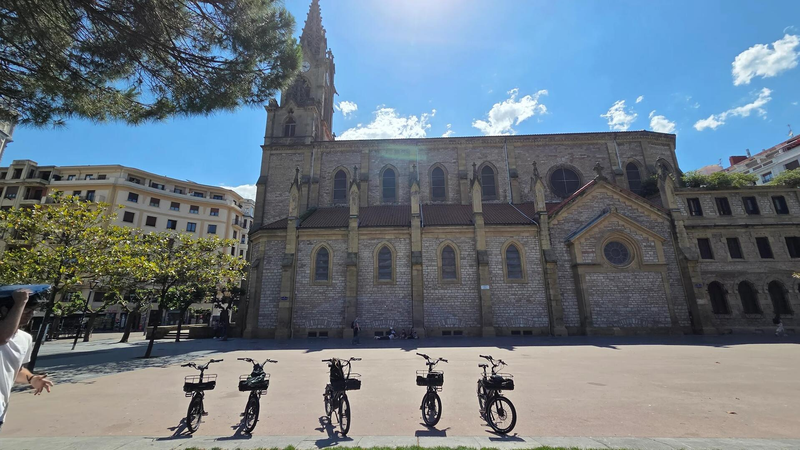
Then the tours take visitors by bike into less touristy corners of San Sebastian.
That creates a different kind of relationship with the destination.
Visitors still get to experience the city.
But they aren't simply being moved from one famous sight to another.
They're given an opportunity to see more of the place—and to think about what tourism means for the people who live there.
Like many independent operators, Go Local San Sebastian is also facing a challenging market.
Competition is intense.
OTAs have taken a significant share of the market.
And competitors are investing heavily in visibility on platforms such as Viator.
For a small independent business, competing purely on volume or commission-driven distribution can quickly put pressure on margins.
That's led the team to a bigger question: what needs to change to create more margin per ticket?
It may mean finding ways to differentiate the experience.
It may mean changing the business model.
Or it may mean making some difficult decisions about where the company wants to compete.
The next couple of years will be important.
But there is also something valuable in asking those questions now rather than waiting until the numbers force the decision.
Go Local San Sebastian's experience highlights a challenge that many independent bike tour operators will recognise.
You're not only competing for customers.
You're also competing within a distribution system where larger platforms can have enormous visibility.
That makes differentiation increasingly important.
So does knowing your numbers.
And so does having an operation that is efficient enough to protect your margins.
For Go Local San Sebastian, that means combining several things: smaller groups, higher prices, simpler processes, automation and a more local approach to the experience.
There isn't one magic solution.
It's about putting the pieces together.
Go Local San Sebastian is part of the Cycle Cities network, a community of independent bike tour and rental businesses sharing practical knowledge and learning from one another.
For operators facing the same questions—how to protect margins, how to compete with OTAs, how to streamline operations and how to create experiences that stand out—being connected to other people dealing with those challenges can be incredibly valuable.
Because sometimes the most useful business lesson doesn't come from a textbook.
It comes from another operator who has already had to figure it out.