
16 Sep 2026
Running a growing bike tour business doesn't necessarily mean adding more and more processes.
Sometimes, it's about doing the opposite.
For Valencia Bikes, one of the biggest lessons from growing the business has been that good operations aren't about creating complexity. They're about creating clear, simple processes that make everyone's job easier.
It's a lesson that becomes particularly valuable as a business gets busier.
Because when bookings increase, the temptation is often to add another tool, another process or another layer of organisation.
But sometimes, the better answer is simply to make things clearer.
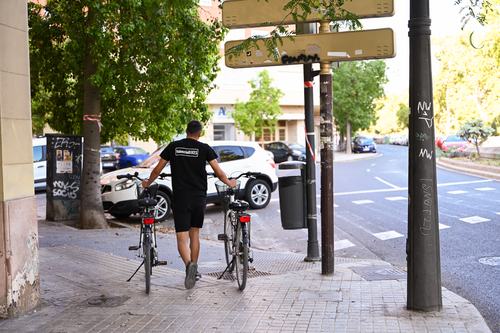
As Valencia Bikes has grown, the team has learned that consistency and flexibility need to work together.
Clear processes help everyone know what needs to happen and make it easier to deliver a consistent experience to guests.
But that doesn't mean every situation can be treated exactly the same way.
Tourism is unpredictable.
Customers arrive with different needs. Weather changes. Bikes need to be adjusted. Plans change.
The team therefore tries to create enough structure to keep operations running smoothly, while leaving enough room for guides and staff to adapt when something unexpected happens.
It's a balance that many independent operators will recognise.
Too little structure creates confusion.
Too much structure can make a business slow and inflexible.
The goal is somewhere in between.
Clear enough to be consistent. Flexible enough to be human.
The same thinking extends to the tours themselves.
Cycling gives visitors a low-impact way to explore Valencia while covering more ground than they could on foot.
But for Valencia Bikes, the experience isn't only about seeing the city from a bicycle.
The guides also share recommendations for local restaurants, cafés, markets and independent businesses.
That can completely change the way a visitor experiences a destination.
Instead of following a route that only connects the main tourist attractions, they can discover places that aren't necessarily on every visitor's list.
A café recommended by a guide.
A local market.
An independent restaurant.
A neighbourhood worth exploring.
These recommendations help spread tourism beyond the most obvious sights and give local businesses another opportunity to benefit from visitors.
And that's one of the things that makes cycling such a natural fit for sustainable tourism.
You're moving through the city slowly enough to notice it.
One of the biggest challenges Valencia Bikes has had to adapt to in recent years is the way people book their trips.
Guests are increasingly making decisions closer to their travel dates.
That might sound like a small change.
For an operator, it isn't.
When bookings come in later, it's harder to know exactly how many guides you'll need, how many bikes should be prepared and what the day's operations will look like.
Planning becomes more difficult.
But waiting for the market to return to the way it used to work isn't really an option.
So Valencia Bikes has learned to become more flexible.
Instead of trying to plan everything too far in advance, the team adapts its planning day by day.
That requires a different kind of operational discipline.
You still need processes.
You still need to know what you're doing.
But you also need to be ready to change the plan when the bookings change.
This is perhaps the most interesting connection between Valencia Bikes' operational approach and the way the company thinks about the customer experience.
A good process isn't there to make everyone behave like a machine.
It's there to give the team a reliable foundation.
Once that foundation is in place, people have more room to respond to what's actually happening.
A guide can adapt to the group.
A team member can respond to a last-minute change.
Operations can adjust to booking patterns.
And the customer still receives the same level of quality.
That balance becomes particularly important in tourism, where no two days are exactly alike.
There is a broader lesson here for independent bike tour operators.
You don't need to predict everything.
You probably can't.
Weather will change.
Customers will change their booking habits.
Demand will move.
The city will evolve.
What you can do is build a business that can respond.
For Valencia Bikes, that means keeping processes simple, maintaining consistency while allowing flexibility, and adapting planning to the way customers are actually booking today.
It's not necessarily the most complicated system.
And that's precisely the point.
Sometimes better operations come from removing complexity rather than adding it.
Valencia Bikes is part of the Cycle Cities network, a community of independent bike tour and rental businesses sharing practical knowledge, experiences and ideas from cities around the world.
Because running a bike tour business can sometimes feel like you're figuring everything out on your own.
Being connected to other operators means you don't always have to.